Toolkit
02
Chapter 2
A GROUP CAN BECOME A SPACE
FOR SUPPORT
Chapter 2 · What is KINTSUGI built on?

14
01
Chapter 1
When there is
no going back
In recent years, millions of Ukrainians have faced events that go far beyond the usual life experience. War, forced displacement, loss of home, loved ones, jobs, safety, or a familiar way of life have become part of reality for many families and communities.
Chapter 1 · When life cracks
09

Level map
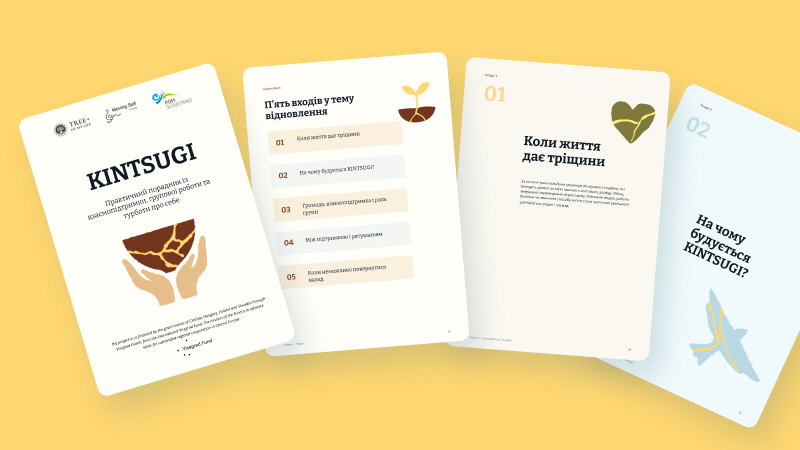
Five entry points into the theme of recovery
01
When life cracks
02
What is KINTSUGI built on?
03
Community, mutual support, and the role of groups
04
Between support and rescue
05
When it is impossible to go back
Level 1 · Map
08

KINTSUGI
A practical guide to mutual support, group work, and self-care



The project is co-financed by the governments of Czechia, Hungary, Poland, and Slovakia through Visegrad Grants from the International Visegrad Fund. The mission of the Fund is to advance ideas for sustainable regional cooperation in Central Europe.
Download the document
This event will present the outcomes of the KINTSUGI pilot project, including the launch of the KINTSUGI Toolkit developed within the project in cooperation with partners from the Visegrad region. The programme will bring together mental health and MHPSS professionals, civil society representatives, and international partners to reflect on current challenges in trauma-informed practice in the context of war and long-term crisis. The event will include: presentation of the KINTSUGI Toolkit discussion of lessons learned from the pilot training modules exchange of practices between Ukrainian and V4 professionals dialogue on safer and more accessible pathways in trauma-informed care More details and registration information will be announced soon.
Event Calendar
Title EN
Subtitle EN
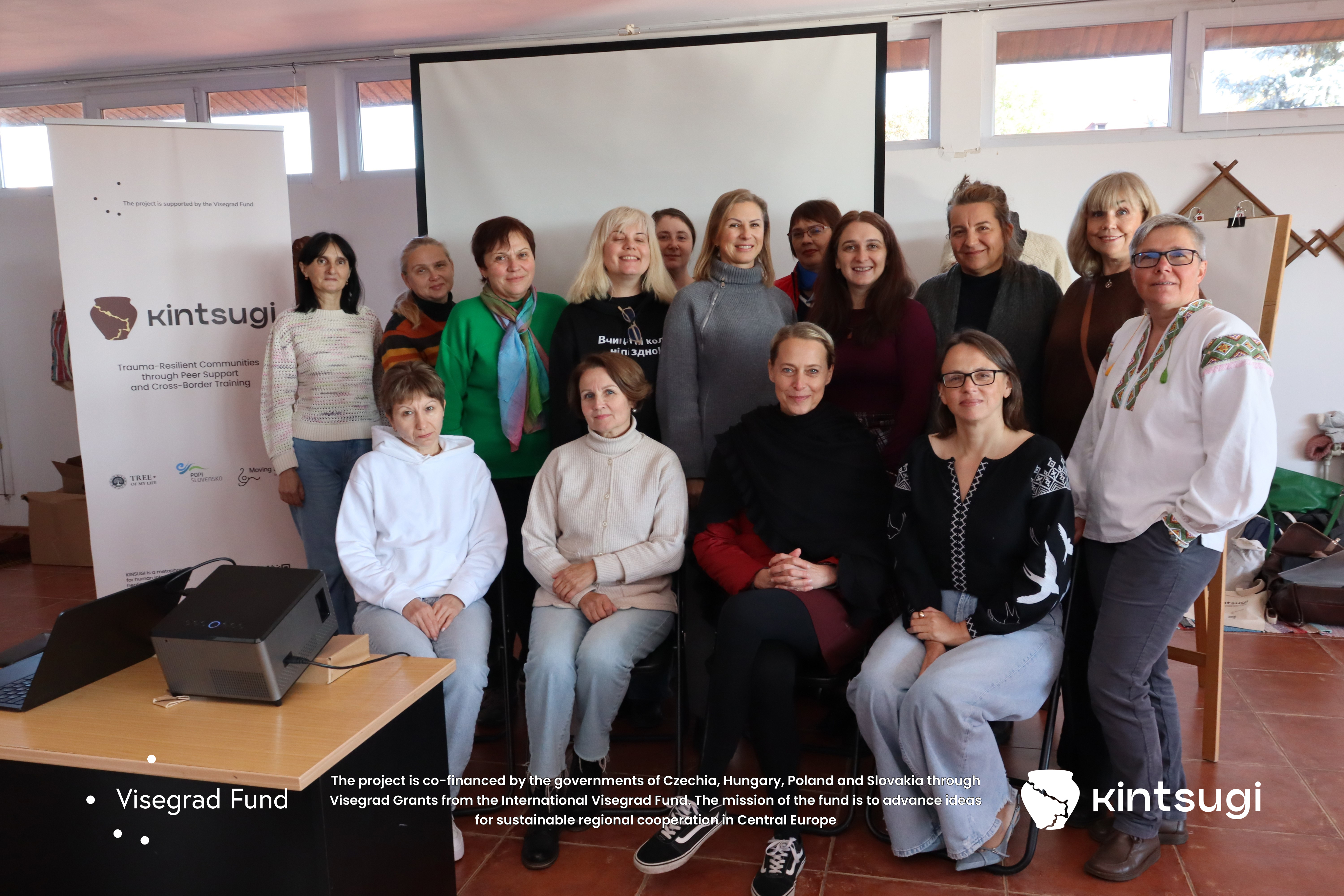
KINTSUGI - Module A1
"Helping yourself is the way to help others"
20–21 жовтня 2025 р
09:00–16:00
More information
Title EN
Subtitle EN
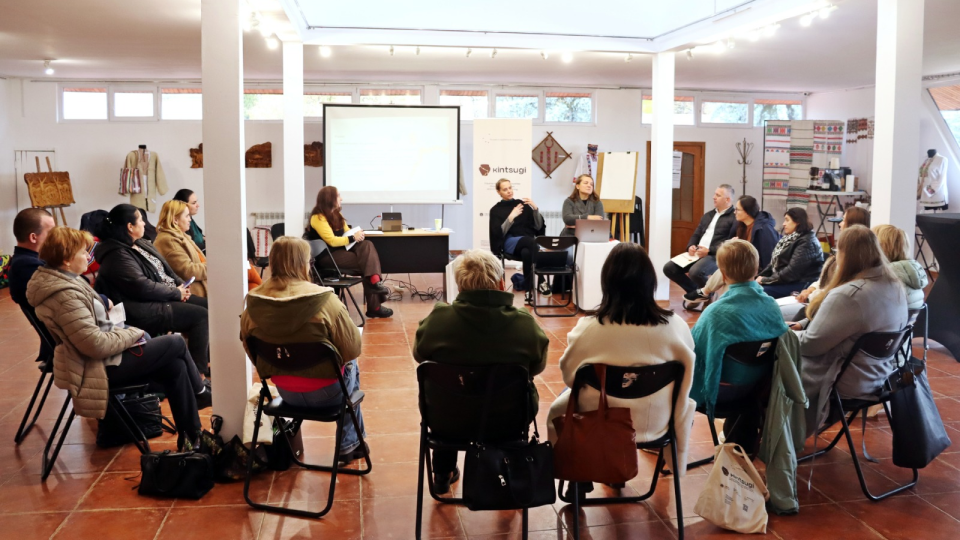
KINTSUGI - Module A2
“Frontline professionals — what do I carry in my backpack?”
23–24 жовтня 2025 р
09:00–16:00
More information
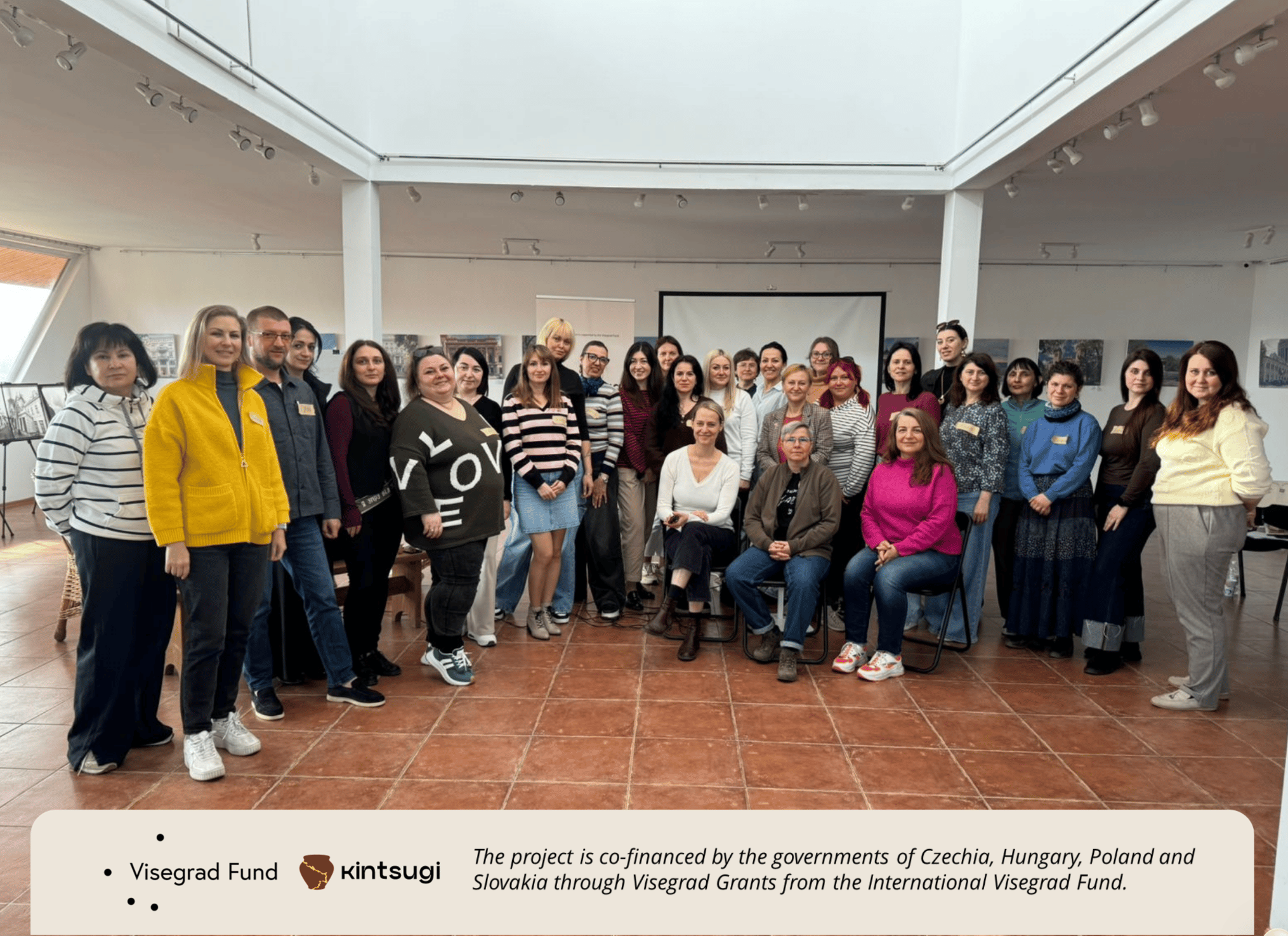
KINTSUGI - Module A3
«Trauma processing in different modalities for psychotherapists»
25-26 березня 2026р
09:00-16:30
More information
KINTSUGI Toolkit Presentation & Professional Exchange Event
The Centre for Human Rights Protection of the Commissioner of the Verkhovna Rada of Ukraine in Uzhhorod, located at: Uzhhorod, Laborcya Square, 1.
14 серпня 2026
10:00–13:00
More information

Toolkit
02
Chapter 2
A GROUP CAN BECOME A SPACE
FOR SUPPORT
Chapter 2 · What is KINTSUGI built on?

14
01
Chapter 1
When there is
no going back
In recent years, millions of Ukrainians have faced events that go far beyond the usual life experience. War, forced displacement, loss of home, loved ones, jobs, safety, or a familiar way of life have become part of reality for many families and communities.
Chapter 1 · When life cracks
09

Level map
Five entry points into the theme of recovery
01
When life cracks
02
What is KINTSUGI built on?
03
Community, mutual support, and the role of groups
04
Between support and rescue
05
When it is impossible to go back
Level 1 · Map
08

KINTSUGI
A practical guide to mutual support, group work, and self-care

The project is co-financed by the governments of Czechia, Hungary, Poland, and Slovakia through Visegrad Grants from the International Visegrad Fund. The mission of the Fund is to advance ideas for sustainable regional cooperation in Central Europe.
Download the document
This event will present the outcomes of the KINTSUGI pilot project, including the launch of the KINTSUGI Toolkit developed within the project in cooperation with partners from the Visegrad region. The programme will bring together mental health and MHPSS professionals, civil society representatives, and international partners to reflect on current challenges in trauma-informed practice in the context of war and long-term crisis. The event will include: presentation of the KINTSUGI Toolkit discussion of lessons learned from the pilot training modules exchange of practices between Ukrainian and V4 professionals dialogue on safer and more accessible pathways in trauma-informed care More details and registration information will be announced soon.
Event Calendar
Title EN
Subtitle EN
KINTSUGI - Module A1
"Helping yourself is the way to help others"
20–21 жовтня 2025 р
09:00–16:00
More information
Title EN
Subtitle EN
KINTSUGI - Module A2
“Frontline professionals — what do I carry in my backpack?”
23–24 жовтня 2025 р
09:00–16:00
More information
KINTSUGI - Module A3
«Trauma processing in different modalities for psychotherapists»
25-26 березня 2026р
09:00-16:30
More information
KINTSUGI Toolkit Presentation & Professional Exchange Event
The Centre for Human Rights Protection of the Commissioner of the Verkhovna Rada of Ukraine in Uzhhorod, located at: Uzhhorod, Laborcya Square, 1.
14 серпня 2026
10:00–13:00
More information
Toolkit
02
Chapter 2
A GROUP CAN BECOME A SPACE
FOR SUPPORT
Chapter 2 · What is KINTSUGI built on?

14
01
Chapter 1
When there is
no going back
In recent years, millions of Ukrainians have faced events that go far beyond the usual life experience. War, forced displacement, loss of home, loved ones, jobs, safety, or a familiar way of life have become part of reality for many families and communities.
Chapter 1 · When life cracks
09

Level map
Five entry points into the theme of recovery
01
When life cracks
02
What is KINTSUGI built on?
03
Community, mutual support, and the role of groups
04
Between support and rescue
05
When it is impossible to go back
Level 1 · Map
08

KINTSUGI
A practical guide to mutual support, group work, and self-care

The project is co-financed by the governments of Czechia, Hungary, Poland, and Slovakia through Visegrad Grants from the International Visegrad Fund. The mission of the Fund is to advance ideas for sustainable regional cooperation in Central Europe.
Download the document
This event will present the outcomes of the KINTSUGI pilot project, including the launch of the KINTSUGI Toolkit developed within the project in cooperation with partners from the Visegrad region. The programme will bring together mental health and MHPSS professionals, civil society representatives, and international partners to reflect on current challenges in trauma-informed practice in the context of war and long-term crisis. The event will include: presentation of the KINTSUGI Toolkit discussion of lessons learned from the pilot training modules exchange of practices between Ukrainian and V4 professionals dialogue on safer and more accessible pathways in trauma-informed care More details and registration information will be announced soon.
Event Calendar
Title EN
Subtitle EN
KINTSUGI - Module A1
"Helping yourself is the way to help others"
20–21 жовтня 2025 р
09:00–16:00
More information
Title EN
Subtitle EN
KINTSUGI - Module A2
“Frontline professionals — what do I carry in my backpack?”
23–24 жовтня 2025 р
09:00–16:00
More information
KINTSUGI - Module A3
«Trauma processing in different modalities for psychotherapists»
25-26 березня 2026р
09:00-16:30
More information
KINTSUGI Toolkit Presentation & Professional Exchange Event
The Centre for Human Rights Protection of the Commissioner of the Verkhovna Rada of Ukraine in Uzhhorod, located at: Uzhhorod, Laborcya Square, 1.
14 серпня 2026
10:00–13:00
More information